

War in Iran Disrupts Fuel Smuggling Lifeline in Pakistan’s Balochistan
Fuel Shortage Hits Local Sellers
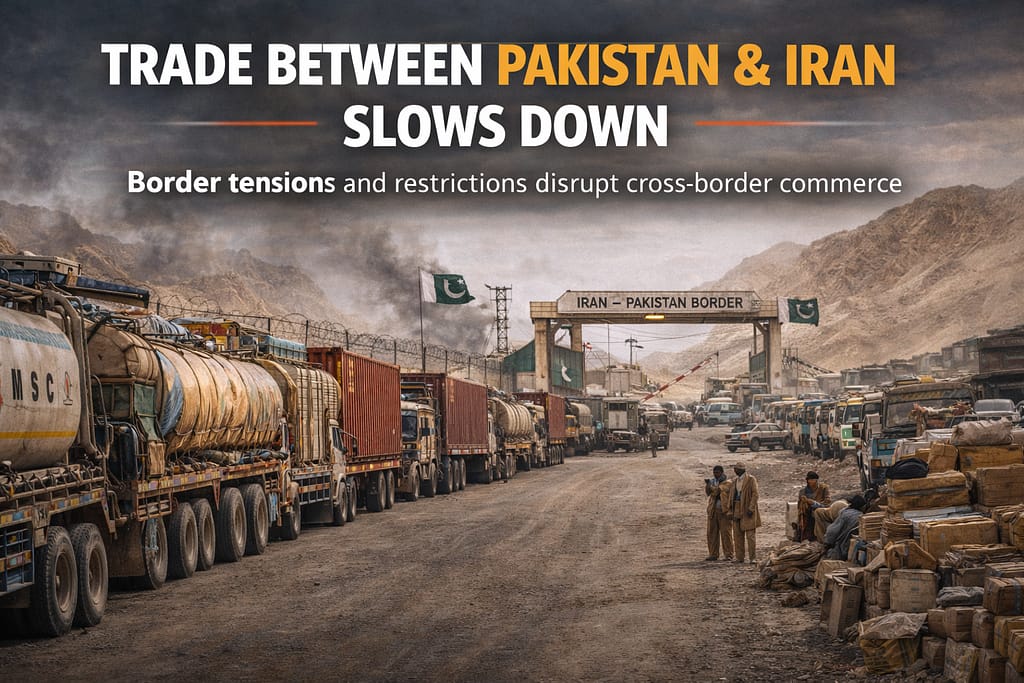
QUETTA: For many years, purchasing Iranian fuel from Quetta’s Hazar Ganja market was a daily routine for Abdul Rauf, a 29-year-old resident of Brewery Road. Like many people in Baluchistan, he earns his livelihood by selling petrol that is informally brought across the border from Iran because it is significantly cheaper than fuel available in Pakistan.
But the ongoing conflict in Iran has changed everything. Rauf now says that even finding 300 liters of fuel to continue his business requires hours of searching.
The informal fuel trade in Pakistan’s southwestern province of Baluchistan has existed for decades. It survives mainly because Iranian fuel is heavily subsidized and therefore cheaper than Pakistani petrol.
However, since war erupted in Iran following US and Israeli strikes on February 28, the supply chain has been severely disrupted.
Border Communities Feel the Impact
Pakistan and Iran share a 909-kilometer border across Balochistan, where communities on both sides depend heavily on cross-border trade. For many families living in this underdeveloped region, these trade activities are a major source of income.
Rauf says the war has already made daily work extremely difficult.
“We are badly affected because the border is closed and I couldn’t find a single gallon of fuel,” he said while searching for Iranian petrol on his three-wheeled Zaranj motorbike.
Before the conflict, Iranian petrol sold for around Rs160 per liter, but prices have now jumped to about Rs255 per liter.
During the first days of the war, the price briefly surged to Rs300 per liter, making it difficult for small traders like Rauf to continue operating.
Rising Prices and Empty Containers
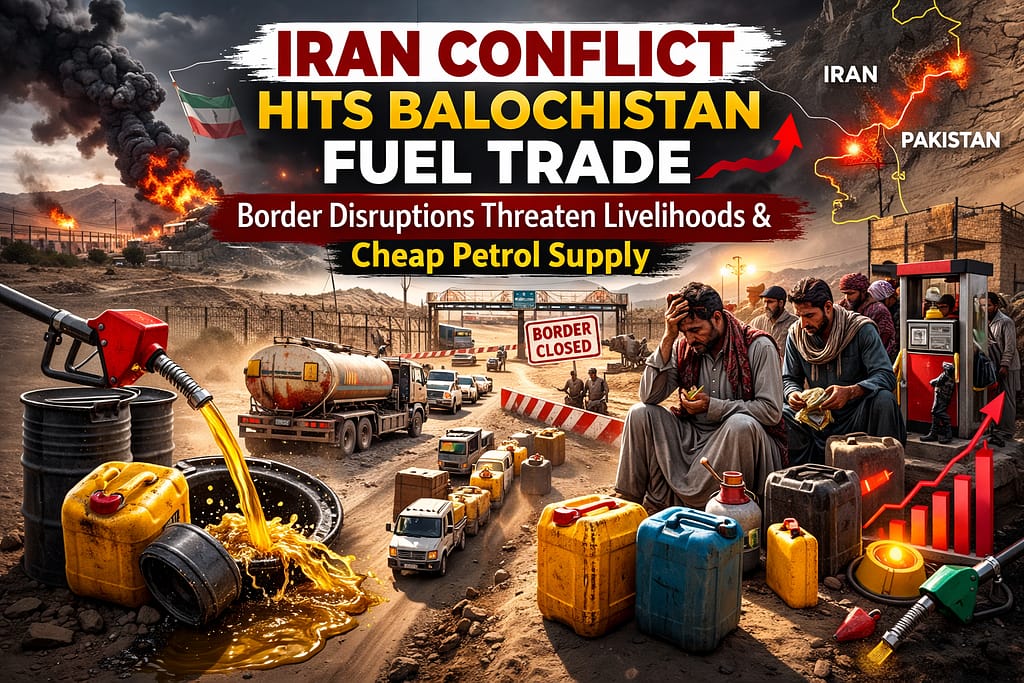
Rauf usually earns around Rs3,000 per day by transporting and selling the fuel, but the shortage means he is now spending most of his time riding around with empty containers.
“I have been moving around with empty gallons because nobody is selling fuel,” he said.
“If the war continues for a long time, we will have no work and no income.”
For decades, Iranian petrol and diesel have flowed informally into Balochistan. The fuel is commonly sold through roadside stalls and small depots across the province.
While much of it is used locally, a portion is also transported onward to Sindh province.
Government estimates in 2024 suggested that five to six million liters of Iranian fuel were entering Pakistan daily, though earlier estimates placed the figure at 15 to 20 million liters per day.
Daily Life Becoming More Difficult
The shortage is already affecting daily life for many residents.
Abdul Ghaffar, a junior government employee who also drives an auto-rickshaw to support his income, says people in the region rely heavily on Iranian goods.
“If Iranian fuel completely stops coming, people will have to start using bicycles because Pakistani petrol is too expensive,” he said.
He added that economic shocks from across the border are quickly felt in Balochistan.
“We are heavily dependent on Iranian items. Whenever there is trouble there, we feel the economic impact here.”
Trade Between Pakistan and Iran Slows Down
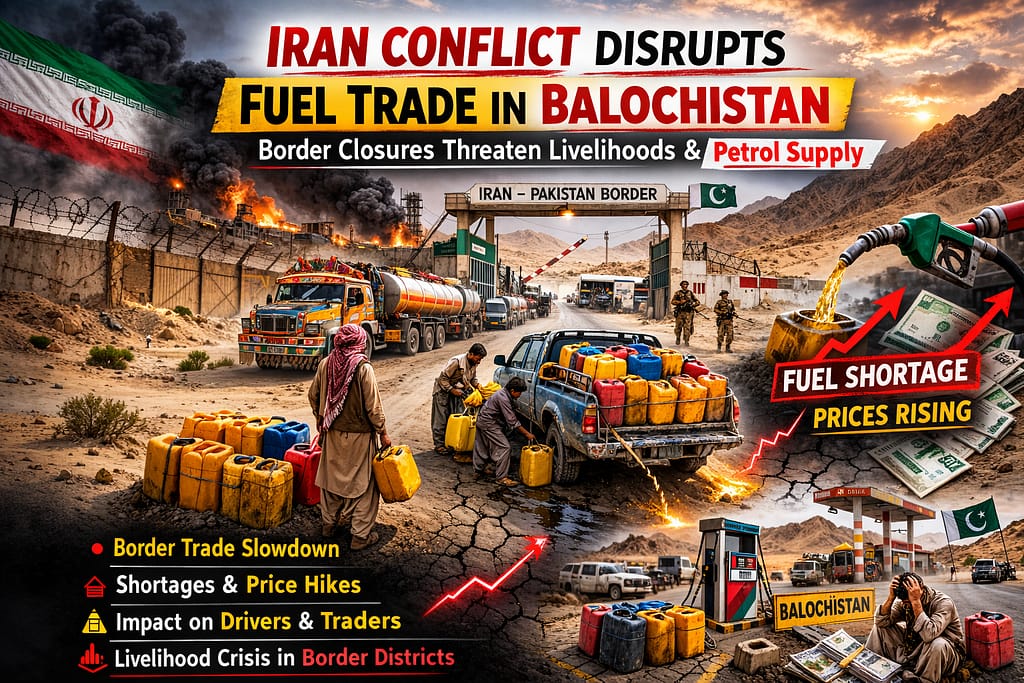
The conflict has also disrupted legal trade between Pakistan and Iran.
In recent years, both countries had been working to improve economic ties and establish border markets to support local communities.
According to the Quetta Chamber of Commerce, Pakistan exports around $800 million worth of goods to Iran each year, while imports from Iran reach approximately $3.5 billion annually.
Both countries had previously expressed plans to increase bilateral trade to $10 billion.
However, traders say the war has severely affected these plans.
Muhammad Ayoub Miryani, president of the Quetta Chamber of Commerce, said nearly 95 percent of trade activities have been impacted.
“Both exports and imports are currently halted, causing major financial losses for traders,” he said.
“If the situation continues, more people could fall below the poverty line.”
LPG Supply Also Declining
Another major import from Iran is liquefied petroleum gas (LPG), which Pakistan relies on to meet domestic demand.
According to trade data, Pakistan imported $687 million worth of LPG from Iran in 2024.
Hajji Shoukat Essazai, an LPG importer in Taftan, says shipments have dropped dramatically since the conflict began.
“Before the war, around 100 to 150 LPG tankers crossed into Pakistan daily through the Taftan border,” he said.
“Now only 15 to 25 trucks are arriving.”
Essazai, who has been in the business for three decades, said only traders with existing stock are able to continue selling.
Meanwhile, LPG sellers in Quetta say prices have already increased.
Naik Muhammad, a trader in Alamdar Road market, said the price of a 50-kg LPG cylinder has jumped from Rs12,000 to Rs16,000.
“We have enough stock until Eid-ul-Fitr, but if the war continues, LPG may disappear from Quetta after Eid,”
