mrtodaywolf@gmail.com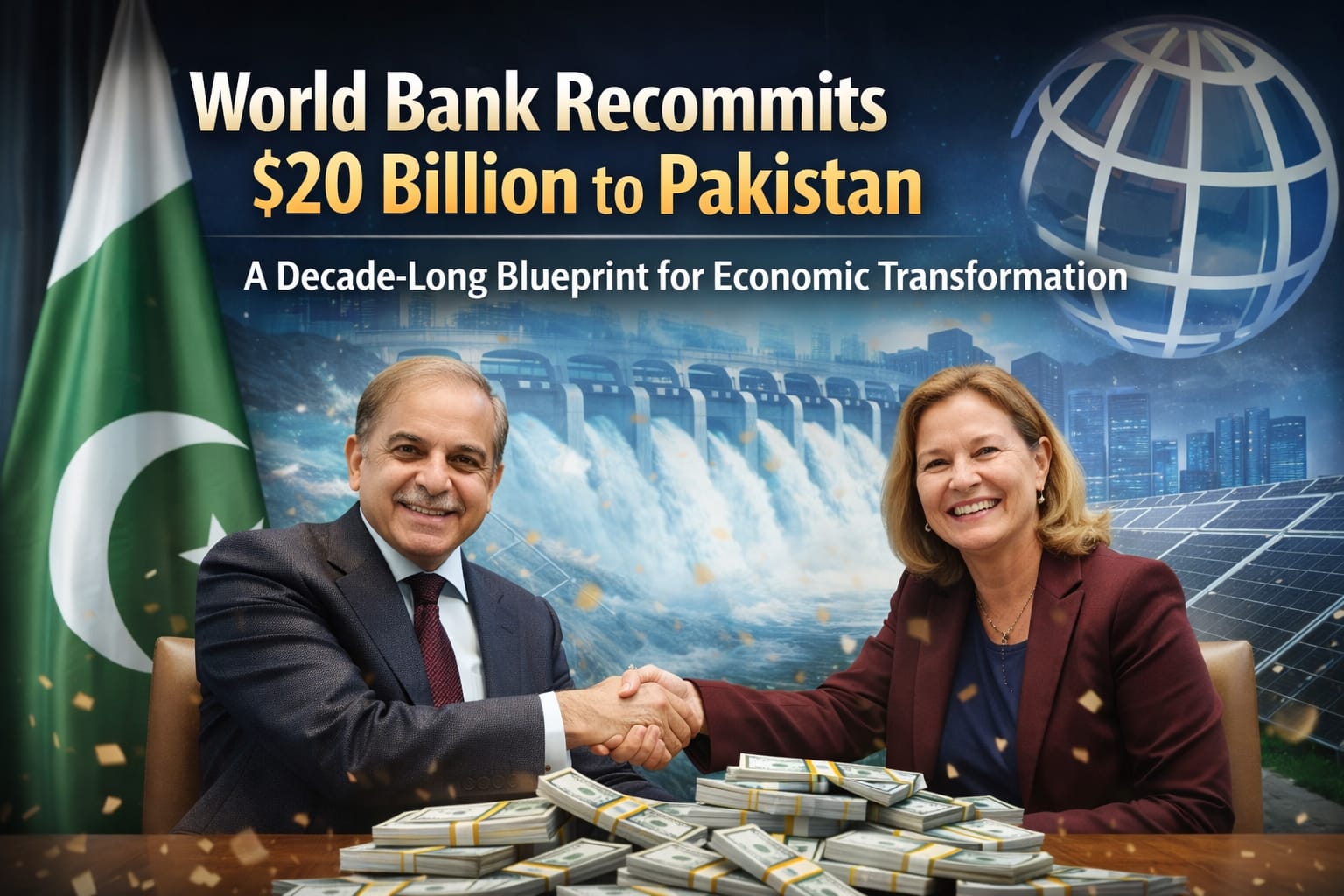
Pakistan’s long-term economic outlook received a significant boost as the World Bank reaffirmed its commitment to a $20 billion development partnership spanning the next ten years. The renewed pledge signals sustained international confidence in Pakistan’s reform agenda and highlights the importance of structured, measurable progress in critical sectors of the economy.
The announcement came during high-level discussions at a global economic forum focused on emerging markets. Senior representatives from both sides emphasized not just financial assistance, but also strategic execution — ensuring that funding translates into meaningful, on-the-ground results.
A Long-Term Vision for Stability and Growth
The decade-long framework is designed to address structural challenges while accelerating sustainable development. Unlike short-term lending programs, this extended partnership aims to create long-lasting institutional improvements and economic resilience.
The World Bank’s leadership stressed that financial commitments alone are not enough. Effective implementation, accountability mechanisms, and transparent governance will be essential to maximizing impact. In other words, the focus is shifting from promises to performance.
For Pakistan, this development plan represents more than funding — it offers a structured roadmap to stabilize public finances, modernize infrastructure, and improve social services.
Key Sectors at the Center of Reform
The discussions highlighted several priority areas that are expected to shape Pakistan’s development trajectory over the next decade:
1. Energy Sector Reform
Pakistan’s energy challenges — including circular debt, inefficiencies, and supply instability — remain a major economic constraint. The development plan supports reforms aimed at improving governance, enhancing renewable energy adoption, and ensuring financial sustainability within the power sector.
2. Education and Human Capital
Long-term economic growth depends heavily on workforce readiness. Investments in education are expected to improve literacy rates, expand digital skills, and strengthen vocational training programs. By focusing on human capital development, the initiative aims to create a competitive labor force capable of driving innovation and productivity.
3. Healthcare Improvements
Healthcare system strengthening is another cornerstone of the partnership. Expanding access, upgrading facilities, and improving service delivery mechanisms are essential to raising overall living standards and economic participation.
4. Climate Resilience and Environmental Sustainability
Pakistan remains highly vulnerable to climate-related disasters. Flood management systems, sustainable agriculture initiatives, and green infrastructure projects are likely to receive increased attention under the program. Climate-focused investments are no longer optional — they are central to economic security.
5. Fiscal Discipline and Governance
Strengthening tax systems, improving revenue collection, and managing public debt responsibly are crucial components of the reform strategy. Enhanced fiscal discipline can reduce reliance on emergency financing and improve investor confidence.
From Commitments to Measurable Outcomes
A key theme of the renewed partnership is accountability. Both parties emphasized the need for clear benchmarks, performance tracking tools, and regular evaluations. The shift toward data-driven implementation reflects lessons learned from past development programs, where delays and inefficiencies limited impact.
Coordination between federal and provincial governments will also play a decisive role. Effective collaboration across institutions is essential to ensure that projects move beyond policy discussions and translate into real-world improvements.
Global Confidence in Emerging Markets
The reaffirmation of this development framework also carries symbolic importance. It signals that global financial institutions continue to view Pakistan as a strategic emerging market with long-term potential.
At a time when many developing economies face fiscal pressures, external debt concerns, and inflationary challenges, sustained multilateral support provides stability. It reassures international investors that reform momentum remains active.
Economic experts note that development partnerships of this scale can catalyze private sector investment. When global institutions demonstrate confidence, it often encourages foreign direct investment and domestic business expansion.
Challenges Ahead
While the funding commitment is substantial, the road ahead will not be without obstacles. Economic reforms can face political resistance, administrative bottlenecks, and external shocks. Global economic volatility, commodity price fluctuations, and geopolitical uncertainties may also influence implementation.
However, the structured nature of the ten-year framework provides flexibility to adapt to changing circumstances. Long-term partnerships allow for course corrections while maintaining strategic direction.
A Turning Point for Pakistan’s Economic Path?
The renewed $20 billion commitment reflects a shared understanding: sustainable development requires patience, discipline, and consistent collaboration.
If executed effectively, this program could significantly enhance Pakistan’s economic resilience, modernize critical sectors, and improve living standards for millions. The emphasis on measurable outcomes, institutional reform, and climate adaptation demonstrates a shift toward forward-looking development policy.
Ultimately, the success of this partnership will depend not only on financial flows but on governance, transparency, and implementation efficiency. The coming decade will test whether strategic planning can be transformed into tangible progress.
For now, the message is clear — international backing remains strong, and the opportunity for economic transformation is firmly on the table.