

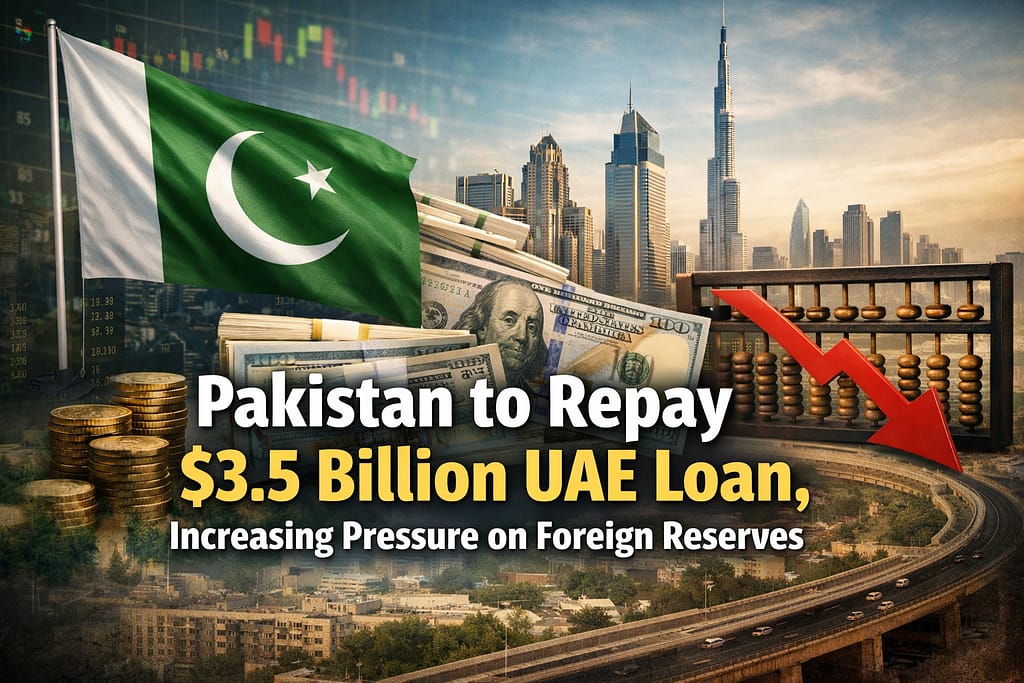
Pakistan is facing more pressure on its economy as it nears its first payment on its $3.5bn loan from the UAE. Government sources say a large payment such as this will reduce the country’s foreign exchange reserves at a time when Islamabad is working hard to strengthen its financial position with the continuation of its $7bn IMF (International Monetary Fund) Programme.
Currently, the country’s foreign exchange reserves stand at about $16.4bn. According to the IMF agreement, Pakistan needs to raise its foreign exchange reserves above $18bn by June 2022, which means a payment of almost 18% of Pakistan’s total reserves will cause more strain on an already fragile economy.
The loan has been extended multiple times since 2018, including a $3bn facility at an interest rate of about 6% per annul. In January 2022, the UAE changed from extending the loan on an annual basis to a monthly renewal basis before Pakistan decided to make a one-time payment of the full amount. Officials expect to complete the payment process by April 23.
In addition to the financial strains faced by Pakistan, there will also be a requirement for the country to pay back a Euro-bond of $1.3 billion, which will mature before the end of Pakistan’s next fiscal year in June. These obligations have put Pakistan’s near-term external repayment obligations at about $4.8 billion, creating an underlying concern for analysts regarding the viability of Pakistan’s foreign reserves.
The authorities have denied speculation that this repayment decision is related to geopolitical issues within the Middle East. According to the Pakistani foreign ministry, this is a standard financial transaction and has no relationship to any political disagreements in the region.
If Pakistan does not replace the funds through new deposits or with assistance from “friendly” countries like China and Saudi Arabia, economists have warned that the reserves of the country could drop below the required level for an agreement with the International Monetary Fund (IMF). Financial assistance at an appropriate time will be essential to stability reserves, preserve market confidence and relieve the pressure on the Pakistan rupee.
